By Nicholas Pagonis
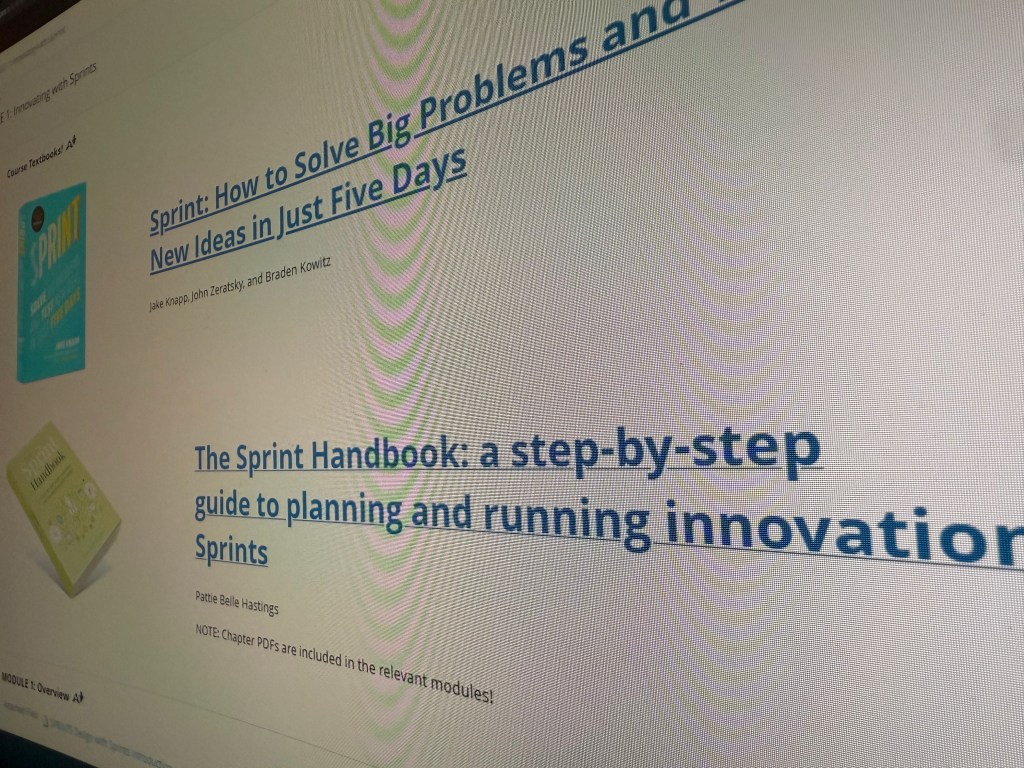
I had no clue what to expect when I applied for the Interactive Media and Communications program at Quinnipiac University. All I knew is that the school’s website sold it well and caught my interest almost instantly. Working remotely and on computers is right up my alley and the course would only take a year to a year and a half to complete, so I figured I would give it a shot and apply. After months of anticipation and daydreaming, class officially started, and after a solid week into the course, I can confidently say that the exciting new world of Design Sprints has been an exciting, fun, breath of fresh air to my academic career! It also serves as quite the intriguing take on how I look at the day-to-day workflow process and how tasks in a company get completed!
What is the Sprint Process?
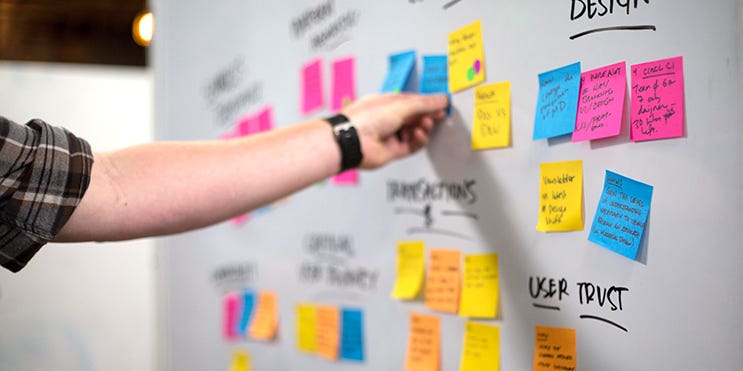
The sprint process as we know it was developed by Jake Knapp and John Zeratsky at Google Ventures in the early 2010’s. It was created to help startups and teams quickly solve critical problems in a compressed timeframe. I had always wondered how these big organizations and small startups alike get anything done, so it was highly interesting to delve deep into the origins of the sprint process! It’s broken down into 5 steps: Understand plus define, diverge plus decide, prototype, test, and reflect plus report. There are many foundational principles of Design Sprints to help keep the process smooth and functional for all team members involved. Two of them, for example, “Working together alone” emphasizes giving your teammates time and space to work by themselves while still contributing to the project as a whole. “Tangible Things Over Discussion” provides the value of crafting physical and/or visual representations of ideas, concepts, and prototypes, rather than relying solely on abstract discussions. It’s quite the incredibly deep and intricate system which I find ever more fascinating! This also holds true after learning about the basics of facilitation and the skills to use it properly!

Facilitation Basics and Skills
Facilitate, by definition, means to make (an action or process) easy or easier. After learning about facilitation in the context of design sprints during my second class meeting, I realized how effectively I’ve facilitated a variety of scenarios over the years! I led me fellow coworkers to help successfully build an inground pool many summers ago when working for a pool company, and I also ran a liquor store on my own for an entire shift! An excellent facilitator has a wide range of talents and characteristics that give them the capacity to lead and support group processes well. It takes practice and experience to design events that allow you to lead groups through creative and practical solutions.
One quality that makes a great facilitator is communication.A facilitator must possess exceptional verbal and nonverbal communication abilities. They should be able to listen intently, express themselves clearly, and encourage candid and civil discussion among group members. Another essential quality of a stellar facilitator is being an active listener. An excellent facilitator actively hears what participants have to say in order to comprehend their viewpoints, wants, and worries. They establish a welcoming and secure atmosphere where everyone is respected and feels heard. One more quality that makes up a top notch facilitator is empathy. A superb facilitator is able to comprehend and empathize with the participants’ feelings and experiences. They foster a supportive environment, handle conflict in a constructive manner, and are perceptive of both individual and group dynamics. This last one, I feel, is the most important, since it’s a quality that a lot of people lack, especially in the workforce.
What’s Next?
I become more and more curious to learn about this exiting new world of Design Sprints by the day! From it’s inception back in the early 2010’s, to the various methods and qualities that it takes to make a Sprint run smoothly and effectively, I only grow more eager to soak in further knowledge in this field! I can’t wait to jump into learning about how startups prepare for said sprints and report back when I’ve mastered more!
 UX Journey
Leave a comment