AI GENERATED
The essay in a nutshell
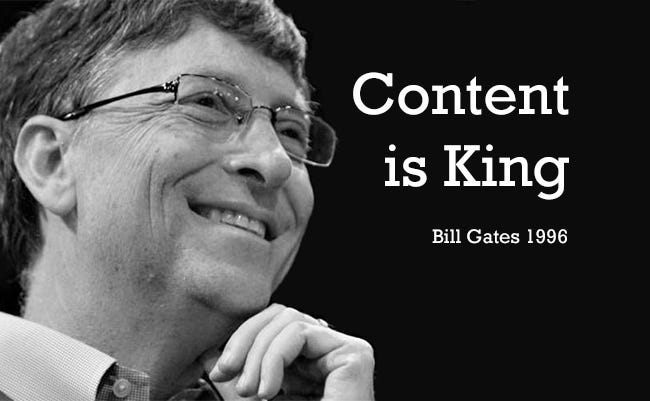
In January 1996, Bill Gates wrote an essay titled “Content Is King”, in which he argued that on the Internet, content—not the infrastructure itself—would become the primary business driver.
He highlighted a few key ideas:
The Internet allows anyone with a PC and modem to publish content globally at very low marginal
The definition of “content” is broad: software, entertainment, information, communities.
Traditional print, magazine, and broadcast media would need to rethink how they adapt online—they can’t simply move print-editions to the web without adding interactivity and depth.
Though the revenue models were shaky then (subscriptions, advertising), the long-term opportunity for monetizing content in new ways was real.
Why this essay still matters
- Visionary in hindsight
At the time—mid-1990s—the Internet was early stage. Gates’s point that “content is where I expect much of the real money will be made” is striking given how dominant content (streaming services, social media, user-generated platforms) has become.
In retrospect, his insight foreshadowed the shift from infrastructure (dial-up, ISPs) to experiences (apps, communities, media).
- Broadening “content”
Gates didn’t restrict content to articles or entertainment. He included software, games, online communities. That helps explain how many business models we now see—platforms built on software, services, interactive participation—not just passive media.
- Democratization of publishing
One of the powerful lines: “Anyone with a PC and a modem can publish whatever content they can create.”
This presaged the creator economy, user-generated content, blogs, YouTube, podcasts. The barrier to entry fell, shifting power from few large media houses to many individual creators.
- Monetisation remains a challenge
Even back in 1996 Gates was cautious: subscriptions barely worked, advertising on the web was nascent.
This reminds us: even when the opportunity is clear, execution (monetisation, scale, engagement) is non-trivial. Many content ventures still struggle.
- Interactivity matters
Gates pointed out that print content just transplanted online wouldn’t cut it: users expect depth, interactivity, multi-media.
That’s why successful content now engages users with comments, sharing, video/audio, live interaction—not just static pages.
Implications for today
For businesses: If you run a company with an online presence, you should think of your website not just as a brochure, but as a content ecosystem. Quality content drives trust, retention, discoverability.
For creators: The idea that “content is king” offers encouragement: focus on value, authenticity, engagement. The platform infrastructure will continue to evolve, but the core remains the content you deliver.
For marketers: Content marketing isn’t new—it’s rooted in this early vision. The key remains: deliver something of value, make it interactive, build community, and monetise thoughtfully (ads, subscriptions, sponsorships, services).
For technologists/platforms: The infrastructure is necessary but not sufficient. The winners often build around content ecosystems: think streaming platforms, social networks, gaming hubs. Infrastructure enables, but content keeps people engaged and coming back.
A few questions to ponder
In a world saturated with content, what makes your content stand out? How are you adding interactivity, value, uniqueness?
How are you structuring monetisation? Is it purely ad-based? Is there a subscription or membership element?
How are you building community around your content, rather than just publishing alone?
Is your content aligned with your broader purpose/brand? Gates pointed out that content is important—but it must serve an audience with intent and value.
Final thoughts
Bill Gates’s “Content Is King” essay may have been written in an early era of the Internet, but its core message remains relevant: in the digital age, what you deliver—information, entertainment, software, experiences—carries the long-term value.
As infrastructure and platforms become ever more powerful and accessible, the differentiator remains: great content, well-delivered, that engages and provides value to people.
In short: content isn’t just king—it’s the kingdom.
 UX Journey
Leave a comment