By Nicholas Pagonis
Creating a digital product starts with an idea, but turning that idea into something people would actually use requires research, experimentation, and a willingness to change direction. When I began developing my product concept, I knew I wanted to create something connected to my interest in UX/UI design. My initial goal was to develop a digital resource that could be useful to people who were learning design or trying to enter the industry. I quickly realized, however, that “something for UX designers” was too broad.
My first step was exploring several possible directions. I considered a UX case study builder, a UX job search resource, and a more comprehensive career toolkit. I researched existing products on marketplaces such as Notion and looked at resources from organizations such as the Interaction Design Foundation. I also examined products such as the UX Portfolio Playbook to understand what competitors were offering, how they positioned their products, and what customers were willing to pay.
The research changed the way I thought about my original idea. I found that there are already many free and inexpensive UX portfolio templates available. For example, UX portfolio templates on Notion have received significant numbers of public ratings, suggesting that designers are actively looking for tools that make organizing and presenting their work easier. At the other end of the market, products such as UX Playbook offer much more comprehensive career systems at premium prices. This helped me identify an opportunity between the two: a product that provides more guidance than a basic template without becoming an expensive course or coaching program.
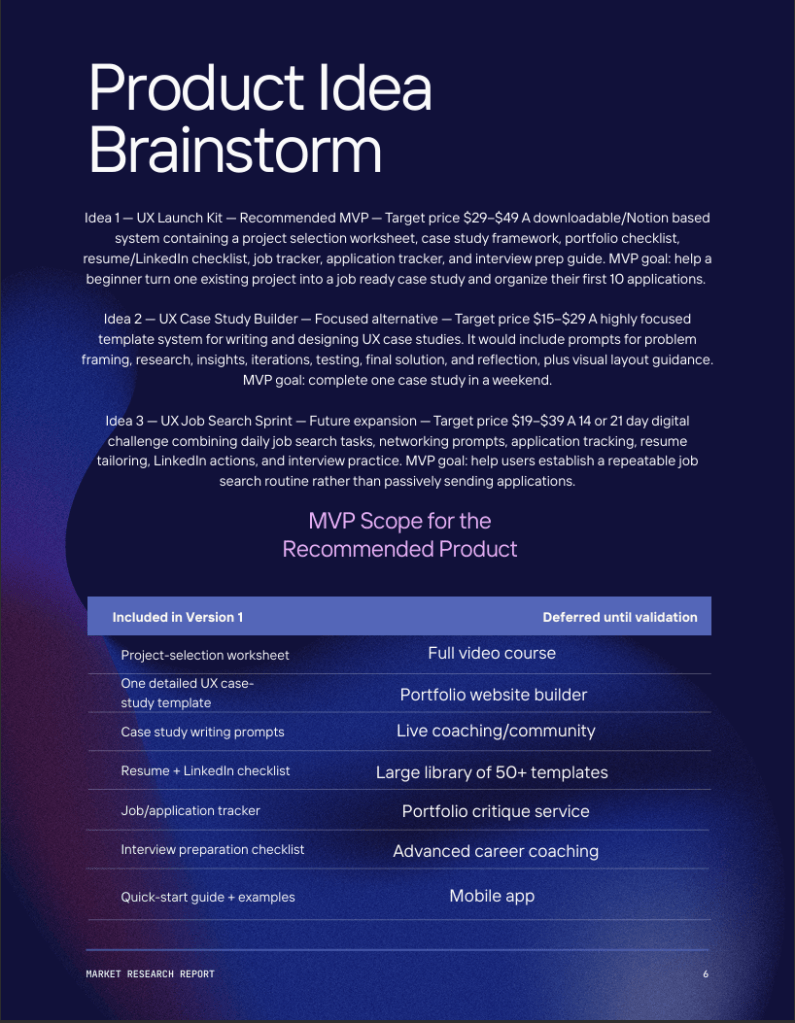
That led me to my current concept: the UX Launch Kit. The product is designed for aspiring UX/UI designers, particularly students, recent graduates, and career changers who have projects to show but may not know how to turn those projects into a professional portfolio and job search strategy. The proposed toolkit would include a case study framework, project selection worksheet, portfolio checklist, resume and LinkedIn guidance, job application tracker, and interview preparation resources.
Feedback and market research also influenced my decision to keep the first version focused. Instead of trying to create a massive career course, I decided that the minimum viable product should solve a specific problem: helping a beginner take an existing project and turn it into a strong case study while creating an organized application process. This makes the product more realistic to build and easier to test with potential users.
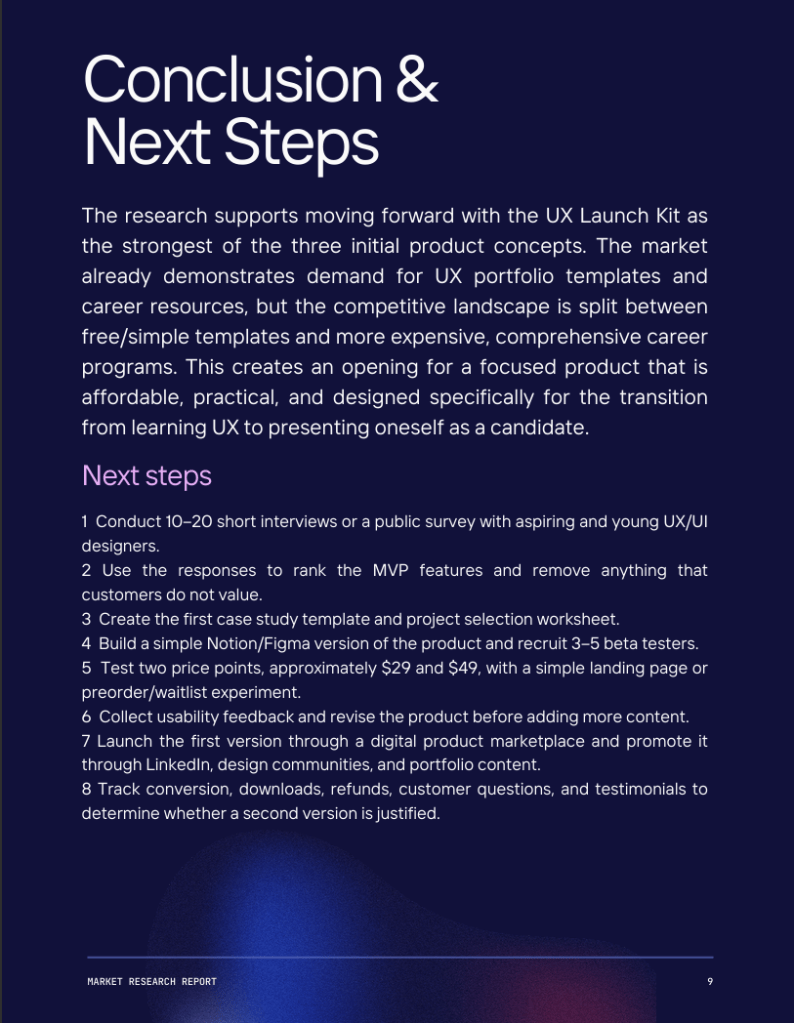
The biggest lesson from this process is that product development is not simply about creating something I think is useful. It is about finding the intersection between what I enjoy creating, what I know, and what people actually need. My next step is to conduct primary research with aspiring and early career UX designers, test the proposed features and price range, and use that feedback to refine the UX Launch Kit before developing the final product.
 UX Journey
Leave a comment