UX Journey

Nicholas Pagonis

  • Nick Pagonis is a motivated young mind who hails from Long Island, New York. He wishes to utilize his education and related work experience in a position which offers growth and personal enhancement. He graduated from Kings Park High School in 2018 and studied at Suffolk Community College for his first 2 years. He set his sights on a communications degree after much confusion and frustration as to what he wanted to do with his education. He finished his Professional Communications journey at Farmingdale State College for his last 3 years as an undergraduate. Now, having a much clearer picture as to his path and calling, he is currently pursuing a masters degree for Interactive Media and Communications at Quinnipiac University.

    Kings Park High School in Kings Park, NY - Homes.com
    Kings Park High School, where Nick graduated with a Regents diploma in 2018.
    Academic Learning Centers - Ammerman Campus
    Suffolk County Community College Ammerman campus, where Nick earned his Associates degree in 2021.

    At the moment, he is undecided as to what he wants to specifically pursue in the field, but he’s eager to make a name for himself no matter what and by any means necessary! He has taken a curious look at all things marketing however, as an intriguing internship opportunity has arisen that he recently applied for. Nick became interested in interactive media and communications within the past few months after a long journey of searching for a career that suits him best. He prides himself as an excellent writer and being passionate about technology, so it’s only natural that he would be attracted to Quinnipiac’s ICM program.

    Home | Quinnipiac University
    Nick’s current college campus, Quinnipiac University.

    Nick took the Design Sprints course to start off his masters degree trek, and he thoroughly enjoyed building a finance app from scratch with his team members. Learning the ins and outs of the Miro program, practicing techniques like Storyboarding, heat map voting, etc., and crafting a White Paper on the dangers of prevalent social media use in today’s society have been incredibly exciting and interesting for him. He’s already jumping right into his Writing Interactive Media and Visual Storytelling classes, having filled out a persona template for the latter!

  • Online MS in Interactive Media and Communications
    Quinnipiac University offers the most fun and inspirational classes!

    Having successfully completed not one, but TWO courses in Quinnipiac’s ICM program, I’ve been been quite eager to start the Fall 2 semester. Kicking things off with the Design Sprints class was challenging, but fun and interesting to learn about. Foundations Graduate Studies was up next, and while it wasn’t as nearly as group work focused, the White Paper assignment at the end of the course was a fascinating way to end things. Now, for my third scrumptious serving of Interactive Media and Communications, I have joined up with the Writing Interactive Media brigade led by Professor John Powers. And so far, it’s been a strong contender for the best class in the program!

    The textbook that I’ve began diving into is titled On Writing Well by William Zinsser. It’s incredibly informative judging from the first chapter alone, no doubt the rest of it is filled to the brim with countless amounts of sound advice. Having an Audible subscription for 15 dollars a month comes in handy, considering the rising cost of physical textbooks these days! I have a good feeling that I’ll be using the knowledge contained in this gem for many years to come, as I actually aspire to write some novels when I get my career going.

    The first class was pretty straightforward, as Professor Powers especially wen over the syllabus for the course and took any questions we had. All of my classmates seem like good people who are just as eager to finish their education here at Quinnipiac as I am! I had just finished my shift at work at 6PM, so I logged onto Zoom using my phone for the drive back. It felt great to be complimented for my dedication to the course by the professor himself! I wanted to make sure I started off on the right foot, but I didn’t think I’d be doing that literally! Don’t worry, I made sure to keep my eyes on the road!

    How to Handle Doctor's Note Requests: Can Your Employer Demand One?
    There’s never an excuse to miss your classes unless there’s a medical emergency!

    For our assignments this week, we first had to write a brief paragraph introducing ourselves to the class, discussing our educational and personal backgrounds. We could also talk about what brought us to the Interactive Media and Communications field as well. We then had to choose two pieces of online content (one well written and the other poorly written) and compare and contrast them. Then, we had to give feedback to our classmates on what they wrote, two people for each assignment. Everyone that I got assigned did great on their passages! Finally we have to make a blog post on WordPress sharing our first week experience in the class, which is what you’re reading right now!

    All in all, I enjoy Writing Interactive Media so far and look forward to meeting with my class every Wednesday! I think it’ll be a thrilling and challenging opportunity to not only advance my expertise in the ICM program here at Quinnipiac, but also to personally improve my own writing for my future endeavors! Cheers to whatever it is that lies ahead!

  • How Technology is "Downgrading Humans" (Tristan Harris X Capgemini)

    Human Downgrading, one of the Center for Humane Technology’s core ideas, links a wide range of societal ills to the extractive attention economy, which is the root cause of all of them. Modern digital platforms, rather than giving us power, undermine our human skills, such as our ability to focus, our mental health, our critical thinking, our relationships, our participation in society, our democracy, and so on.

    In public presentations and professional testimony before the US Congress, Tristan Harris and CHT stress that these damages are not isolated but rather systematic and reinforcing, creating a “dark cloud” that diminishes our overall human potential.

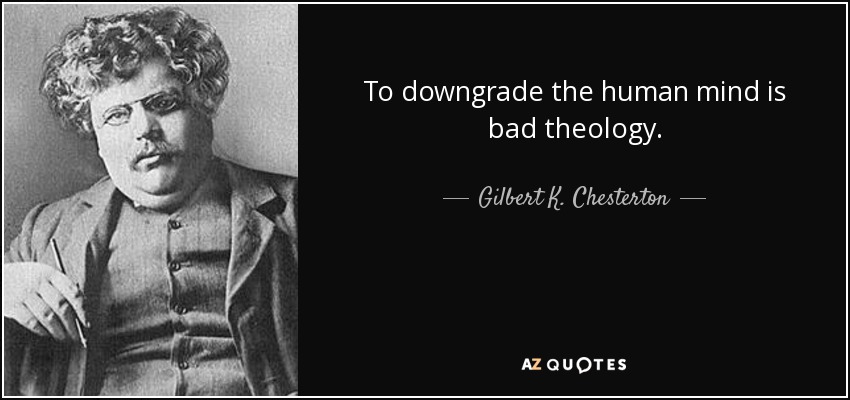
    Gilbert K. Chesterton quote: To downgrade the human mind is bad theology.

    Some of the “Human Downgrading” framework’s important aspects are interconnected harms, system-level clarity, a call to action across all sectors, and a common narrative to bring about change. Unlike treatments that address problems like addiction, polarization, or disinformation independently, CHT demonstrates how harms are related and originate from the same root: technology that prioritizes capturing attention above all else. By giving the interconnected problem a name, CHT facilitates coordinated solutions. The terminology promotes cooperation between community development, education, policy, and design initiatives.

    By incorporating human values into product design, designers are moving away from addictive mechanics and focusing on enhancing well-being. Tech employees use shared language to promote structural change inside the organization. Additionally, legislators want safeguards and inducements that would offset the extraction-driven current situation. Making a consistent story not only describes the issue, but it also fosters systemic change and collaboration.

    Former Google Ethicist Tristan Harris on Tech's 'Human Downgrading' : It's  Been a Minute : NPR

    By concentrating on Human Downgrading, we can move beyond individual symptoms, such as political fragmentation or social media addiction, and address the underlying economic models and designs that cause them. It facilitates collaboration across sectors in order to redesign technology in a way that improves rather than impairs human capabilities. The approach of CHT is not to give up on technology but to redesign it so that it supports human well-being rather than taking advantage of cognitive weaknesses. Their goal is to transform the ongoing “arms race for attention” into an “arms race for human benefit.”

  • Book Review: “Stolen Focus” (Johann Hari) | Garth Nichols

    In Stolen Focus Chapter 8, The Rise of Cruel Optimism, Johann Hari explores the concept of “cruel optimism” primarily in the context of how we approach attention loss and productivity in modern society. The term “cruel optimism,” originally coined by theorist Lauren Berlant, refers to situations where the things people hope for are actually obstacles to their flourishing — where the object of desire becomes part of the problem.

    According to Hari, many of today’s self-help recommendations on attention and productivity, such as time management tips, digital detox apps, and mindfulness training, provide a sort of cruel optimism. While these tools claim to help us regain our focus, they divert our attention from the underlying, structural reasons for our attention loss, such as surveillance capitalism, data-driven social media algorithms, excessively exciting digital environments, and work cultures that cause burnout.

    Battling Back our Stolen Focus

    People are led to believe that they may improve their focus by simply working harder, even if the underlying causes are beyond their own control. The optimism is “cruel” because it fosters false hope and prevents people from calling for more significant societal change. The fixation with self-discipline in culture is criticized by Hari. He argues that it is not only ineffective to instruct people to just use more willpower to concentrate in an environment that is intended to distract them, but also demoralizing. Again, this demonstrates cruel optimism: attempting to flourish in a system that almost prevents it.

    The book also promotes the naive notion that the same tech firms that gain from attention fragmentation will one day create solutions to enable users regain their concentration. According to Hari, this is foolish since it’s like asking arsonists to come up with fire prevention plans.

    Book Review: “Stolen Focus” (Johann Hari) | Garth Nichols

    Johann Hari uses the concept of cruel optimism in Stolen Focus to demonstrate how society pushes people to look for individual answers to what are actually systemic issues. When it prevents individuals from addressing the technological, economic, and cultural structures that are initially diverting their attention, optimism turns harsh by trapping people in cycles of self-blame and delusion.

  • Project Management : What Is Project Management ? - PM 360 Consulting

    The process and outcomes of how I would choose and establish a project management system are clearly explained here. This may be modified to fit a class project, a team, or a business. I would start by determining the needs of my team and the kind of work we handle. Some of my main factors are the number of users, the complexity of the task, the need for collaboration and communication, the budget, and the integration with applications such as email, calendars, and file storage. I may also think about the project’s nature (such as agile, waterfall, or hybrid) and if time tracking or Gantt charts were needed. I would compare numerous platforms, such as ClickUp for its adaptability and comprehensive features, or Trello for its straightforwardness and visual design. I would compare each platform based on things like cost, features and personalization, mobile access, and user-friendliness.

    I would then run 1-2 week trials with two platforms of my choice, such as ClickUp and Asana, once the basics were in place. Every day, my team members would assess how things were being used, such as assigning tasks, establishing deadlines, and making comments within projects. Feedback will then be gathered on how easy it is to use, how well the workflow is visible, how effective the alerts are, and how clear the dashboard is. Suppose that, in the end, I selected ClickUp because it strikes a balance between structure and flexibility and can accommodate a variety of team sizes and project types.

    The Complete Guide to the Project Management Office | Acuity PPM

    After a program was chosen, my team and I followed a series of steps. We would organize spaces by departments and major project types, create the main workspace, create project templates for common task structures, and add unique fields to monitor priority, status, deadlines, and ownership. Finally, we will provide cheat sheets and conduct a one-hour training session for team members. We would discover that the project management system has had a significant effect. The outcome would be something like greater clarity, with team members understanding their responsibilities and deadlines. Members would communicate more effectively, and centralized comments would lessen the amount of disorganized email conversations. With templates and automation reducing monotonous setup, there would also be time savings.

    The Difference Between Project Managers and Scrum Masters | Scrum Alliance

    By taking the time to define my needs and my team’s needs, compare tools, and roll out a system with collective input, We achieved a smoother workflow and more efficient project execution. Regular reviews ensure we continue to optimize the system as our needs evolve.

  • How a Digital Detox Transforms Your Mental Health | Clarity Clinic

    This practice was a lot of fun, and I paid close attention to every element of this work! It was a joy to explore every aspect of the piece displayed because I have always enjoyed art and the ability to create it myself. I found it to be exquisite, fascinating, and articulate, especially the way the water mirrored the buildings or the way the water’s colors of black produced a rippling effect. I was so engrossed in admiring each brushstroke of the artists that the 10-minute timer passed me by. The entire thing was laid back.

    I’m a person who sticks to things no matter what, especially if I’m passionate and/or concentrated on them. Despite having become accustomed to the short attention span, instant gratification world of social media and technology, I was completely captivated by the picture. I found it simple to take it easy and simply sit in silent reserve, with only me and the meticulously arranged colors in front of me. This workout was much more than necessary as it provided a respite from a nation that is constantly urging you to go faster every day and from having to use your computer and smartphone for everything you do in this day and age.

    “Nocturne in Blue and Silver” by James McNeil Whistler

    For me personally, I could see myself using these exercises as a means to temporarily detox from social media, the internet, and technology in general. I could incorporate them into my daily routine, choosing different paintings and time limits with every session. Not only does it help clear my mind from all the stress that this complicated, busy everyday life brings, but I also get to appreciate more gorgeous art pieces that are equally thought provoking. I believe many other young people in my generation could greatly benefit from doing something like this! It doesn’t have to be the exact same exercise, as long as the concept and message are the same. It’s an effective way to build ones patience and attention span over time, allowing someone to be more effective at their job dealing with angry customers, or navigating family drama for example.

  • I’ve never been one to be organized or methodical with my dreams and goals, but this week’s assignments helped me practice the skills necessary to get serious about it. The time, creativity, and energy management worksheets that I was tasked with completing really opened my eyes to what I could improve on work wise, what I was actually pretty capable of, and what I really wanted out of life. It started with stating in writing what my three biggest priorities in life were. I decided upon financial stability, a happy, healthy marriage, and being handy. I then divided my time spent on various activities and chores throughout the 168 total hours in a single week. I found that I ended up using more that the total number, almost 200 hours. I began seeing how my priorities were in the wrong places, as most of my attention was on entertainment and hobbies. Regardless if I overestimated how much time I was actually using, it was a problem that needed addressing.

    The next exercise was more of a questionnaire, designed to reveal what I may already be doing correctly, and what I could be doing to improve my time management. I was in deep thought when asked about if I had been setting short and/or long term goals, if I knew what I wanted out of life and how to get it, etc. I was honest in all my responses, stating that I was definitely conscious of my moment to moment choices and what they mean. I also stated things like that I admittedly could research more on how to improve my productivity. It was a productive introspection on myself and daily habits and mindset.

    5 Goal Setting Steps To Achieve Your Dream Goals - Thrive Global

    I then took part in “The Whim reaper” exercise, where you think hard about all the things you would do with your life in a year, with you dying at the end of it. No matter how outrageous the dream or how far fetched the goal, you’re supposed to write it down and really own it, believe in it. I always found space and planets fascinating, so one of my answers was to train being an astronaut and fly to the moon! Another one of my manifestation answers was about how I would exercise daily and work up to running a marathon, since I had always had an interest in being able to run fast. From what I understand about this Whim Reaper business is that it’s about pushing yourself to make the most of your time, doing something with the life you’ve been given, a big push for you to live actively. I found it quite helpful in my personal experience.

    The last big activity that really jogged my mind to start taking my goals and dreams more seriously was the “Hole/Goal” exercise. It’s meant to visualize your goals and roadblocks in the form of ladders, putting your ultimate life goal at the bottom of the “Hole” ladder and at the top of the “Goal” one. You list the obstacles that you’re facing to achieve your goal first, then you take those obstacles and turn them into solutions. In my case, getting married and having kids was my ultimate goal, but I needed to complete my masters program first, buckle down and focus on my priorities more, and needed to have a part time job for now to stay afloat. I then took a more positive approach to my roadblocks by doing the opposite on the second ladder, starting with how I can overcome my challenges. I only have to spend one year in my masters program, then I can immediately start job hunting and save 70 percent of my income. I’ll then build good credit to be able to apply for a down payment on a house and a car, eventually building up to the house and cars my wife and I want, as well as providing transportation for our future kids when they’re older.

    Premium Vector | Reaching dream wish, goal achievement, pursuing dreams  concept. Business success, person reaching goal vector illustration. Reward  and motivation male character
  • Introduction

    Having spent an extensive amount of time learning the ins and outs of the design sprint process, I can safely say that this next course will be more my speed! From what I understand, it’s much more simple in its execution and teachings, containing lots of writing, citing, and plagiarism checking that equals a straightforward approach to how work is completed compared to design sprints. Usually, the graduate-level introductory course, Foundations of Graduate Studies, is intended to assist incoming master’s and doctoral students in making the move into graduate school and succeeding in an advanced academic setting. To give pupils the tools, abilities, and attitude they need to succeed in their postgraduate studies, it typically covers academic research, writing at a scholarly level, critical thinking, ethical and moral research, and using institutional resources.

    Graduate level writing and communication is one of the areas that Foundations of Graduate Studies focuses on. Students are taught how to properly format their research papers such as a bibliography, in formats such as APA and MLA. Websites like EasyBib help check for plagiarism, cite sources correctly, and correct any grammar and/or spelling mistakes.

  • Introduction

    This Saturday concludes the end of my first official sprint, and I’m exiting the experience all the more enlightened and eager for the future! I obviously couldn’t have done it without my talented classmates by my side, so allow me to introduce them and break down our procedures! My team consisted of Chloe, Kyle, Andrea, Dylan, and myself (Nick). We would split up the responsibilities of our sprint process every week to shake things up and give everyone a fair, equal amount of work. The whole process took 7 weeks, beginning at the end of May and concluding at the start of July. We would meet once per week (outside of our weekly class meeting) on Fridays from 1PM to 2:30PM. We set out to create a finance app for young adults to help them manage, build, and more effectively save their finances and give them the tools to learn about finance in general. And thus, PennyPal was born!

    PennyPal combines education and amusement to make learning about money enjoyable, social, and rewarding, making it a financial literacy program created especially for Gen Z. The software helps with budgeting, saving, making wise purchases, and comprehending the overall reasons behind our actions. A significant incentive for users to return is PennyPal’s ability to allow them to accumulate points that can be redeemed for actual discounts in the real world. In addition to its chat rooms, PennyPal fosters a peer-led community by providing locations where users can interact, exchange financial advice, and share objectives in a supportive manner. PennyPal is all about managing your finances while having fun. A person categorized in Generation Z (Ages 13-28) should use the educational smartphone app PennyPal to teach his/herself the ins-and-outs of financial literacy, as well as formulate a long-term budgeting, saving, and/or investing plan.

    Sprint Overview

    Phase 1: Team Blue began the sprint process to build a successful finance app prototype by researching other mobile apps to draw inspiration from. I personally chose to follow the example set by Discord, as I felt it’s chat rooms could be useful for connecting with other users and allows for 1-on-1 communication with a bot for finance advice. My other team members came up with things like bar graphs for measuring goal progress, a shop for users to redeem real-life rewards, and video feeds for learning new topics. Some finance apps that we looked to were Credit Karma and Fetch. We placed all of our sketches into a shared Miro board and left sticky notes on them to share what we liked about each one.

    Phase 2: Once the second phase kicked off, we commenced the voting practices that are commonplace in the design sprint process. We used Heat Mapping to anonymously decide which were the best sketches and which were the worst ones. Blue dots signify sketches and ideas that we really like for the finance app, and red dots represent the opposite. We narrowed down the options even further afterwards by participating in Straw Pole voting, placing a green/white star dot on the sketches that are guaranteed a spot in the prototype. After gaining a better focus on what features our app will eventually have, we crafted our own user flows and voted on what the best one is out of them all as well. It’s essentially a line of six post-it notes that outline the most logical path that a user would take when using the app. For example, it would start with the user signing up using their email and/or phone number, that leads into taking the intro survey to better gauge the users financial interests and goals.

    Phase 3: Phase 3 involves developing a realistic prototype of the chosen solution. While concentrating on the essential interactions and components of the user interface, the prototype might have a low or high fidelity. We took into account the nature of the product (digital, physical, or service) when selecting the right tools. The objective is to develop a product that is sufficiently realistic for user testing. My job in particular was to play the role of team support, as anyone who is not prototyping still contributes. My responsibilities included analyzing the prototype for clarity, errors, or gaps in the flow, creating fictitious data or accounts to mimic actual usage, and assisting with the creation of assets (icons, pictures, etc.).

    Phase 4 and 5: The goal of Phase 4 and 5 is to assess whether the solutions that were tried in the Sprint are valid or not. This is where essential qualitative and quantitative data is gathered from potential users of the product or service being created in the Sprint. We had to recruit 3-5 people to interview for user studies, schedule and conduct said user studies, and collect and organize the data to see the best way to develop the product. These user tests are interviews that ranged from 5-10 minutes per participant, in which they were all asked the same set of questions. We could not interview someone that we knew, it had to be fresh faces with whom we have never seen before.

    The problem statement of our design sprint was to create an educational, finance mobile app that caters to Gen Z. Coming from Gen Z myself, I know how addictive smartphones and other technology can be! So in order to not only lean into the informative side of the app as well as the fun, interactive side evenly, we emphasized the use of the games section and the video feeds/chat rooms sections to maximize the chance of Gen Z using PennyPal consistently. The kids and young adults will get plenty of learning in through the use of tutorial videos, 1-on-1 bot chat rooms, and connecting with friends while also being rewarded by playing the various games and points they can earn. They can use those points for real-life gift cards and other monetary items in however way they see fit.

    Sprint Activities

    Lightning Demos: All team members share their notes and apps that they used for influence. Team members can place their notes on post-its and take screenshots of the apps that caught their eye.

    4-Step-Sketch: Ideas and solutions are produced. Team members jot down ideas, then proceed to draw and sketch solutions step by step. It promotes the sharing of ideas from individuals of all skill levels and aids in picturing possible answers.

    Heat Mapping: Team members place color coded dots on everyone’s features to determine what they like and dislike for the prototype.

    User Flow: Everyone creates a line of six post-it notes that depict how a user would go about navigating through the prototype. Team members vote on the most logical one.

    Storyboarding: Combines both the chosen user flow and the most popular sketches from the previous exercise to show how the prototype will end up looking like.

    Prototyping: The Blue Team crafted the first prototype of PennyPal using a handful of software. We selected the font, iconography, and color palette carefully to make sure our app makes a strong first impression on our user test participants.

    Testing: Blue Team members Chloe and Andrea facilitated the user testing interviews, asking the same questions to each person as they explored PennyPal.

    Conclusion

    All in all, my first design sprint was a complete success. The Blue Teams communication was on point for the entire course and we all worked hard to formulate the best prototype that we possibly could. We found from our user tests that PennyPal will an exponential growth rate if it sticks to the Daily Trivia and Goal Tracker features. We also found that its chat rooms need more of an entertainment sheen to them as well as upgrading the color palette and incorporating the PennyPal mascot more. After all the incredible work the Team Blue accomplished with this prototype and design sprint, I have no doubt that PennyPal will be a staple in the finance and mobile app worlds respectively for many years to come! Countless young adults from Gen Z and many more fresh faces from the generations after us will arm themselves with financial knowledge and confidence in order to not only survive in this unforgiving world where money makes everything go around, but thrive in it as well!

  • A quick summary of the shiny, new finance app: PennyPal!

    In the context of a Design Sprint, which Google Ventures made famous, the user testing portion of the Sprint process is a crucial step that takes place on the final day (Day 5) of the Sprint. The purpose of this phase is to confirm (or disprove) the remedies sought in the Sprint. In the Sprint, this is where crucial data (qualitative and quantitative) is gathered from the individuals who would be using the product or service that is being created. It also allows the Sprint team to minimize risk before investing in development, address usability challenges early, and obtain immediate feedback on hypotheses made throughout the sprint. For my team specifically, our finance app, PennyPal, was ready to be put to the test by real people, where they’d be able to tell us the advantages and disadvantages of our prototype. This is how we went through the operation and what we found!

    User Testing

    First, we followed the guidelines for Sprint Phase 4 to recruit 5 candidates for our user interviews. Secondly, we had to plan and carry out our user studies in accordance with the guidelines for facilitating and recording the process. And third, we had to examine the data gathered throughout the research, then, compile and arrange the discoveries and findings into practical actions for the products development. But I’m getting ahead of myself here! What exactly is user testing? The goal of user testing is to determine how simple and efficient a product is by watching actual users utilize it. It’s extremely important for the last phase of the Sprint process because the test shows what issues cannot be overlooked in the product’s overall success, and users will use it in unanticipated ways. Also, by making the program more intuitive, efficient, and enjoyable, testing can help retain users.

    A user interview with Shayna, one of our candidates for testing.

    We had to recruit 3-5 people to interview for user studies, schedule and conduct said user studies, and collect and organize the data to see the best way to develop the product. These user tests are interviews that ranged from 5-10 minutes per participant, in which they were all asked the same set of questions. We could not interview someone that we knew, it had to be fresh faces with whom we have never seen before. For example, If Kyle is a friend of mine, I cannot facilitate him for this exercise. Our user tests revealed that PennyPal’s growth rate will be exponential if it concentrates on the Daily Trivia and Goal Tracker features. In addition, we discovered that its chat rooms need more of an entertainment sheen, improvements to the color scheme, and greater inclusion of the PennyPal mascot.

    One of the five feedback sheets from one of our volunteers.

    As you can see, user testing and feedback is critical to the success of a design sprint teams prototype. Having a few outsider pairs of eyes can help you spot issues and dilemmas that you didn’t think were there or could be there. I think the idea to use the PennyPal mascot more in particular would be a genius idea! It’s a kid-friendly marketers dream, with the penny’s big smile, cartoon hands and feet, along with its signature money bag that will be easily recognizable to Gen Z. But that’s not to say the other points the user testers made weren’t equally valid, because they were! Incorporating a slice or two of entertainment into the chat rooms will make it so that the tech-obsessed Gen Z doesn’t get bored and/or too overwhelmed with all the tutorial videos and stale 1-on-1 bot conversations. Leaning into the Goal Tracker and Daily Trivia features more with serve to keep Gen Z motivated to keep using the app, with the thrill of reaching a new milestone and turning the trivia questions into redeemable points can prove to be very lucrative.